Risk Management Strategies for Businesses Operating in the GCC
If you ask most business owners why they chose the GCC to expand their company, the answers are usually the same.
- Strong economies
- Government backed growth plans
- Tax advantages
- Access to international markets
All of that is true.
But anyone who has actually operated a business here for a few years will tell you something else. The GCC rewards prepared companies and punishes careless ones.The region moves fast. Regulations evolve. Payment cycles can stretch. One poorly written contract or compliance oversight can create problems that take months to fix.That is why experienced companies always think about risk management strategies early, not after something goes wrong.
Risk management in business is not about fear or hesitation. It is about reducing surprises.When companies understand where risks come from, they make better decisions and grow more confidently.Let’s look at the areas where businesses operating in the GCC need to pay the most attention.
The First Risk Most Businesses Ignore: Legal Structure
Many companies entering the GCC focus on speed. They want the company registered quickly so they can start operations.The problem is that speed sometimes replaces proper planning.
Different GCC countries have different business regulations. Ownership rules, licensing structures, activity approvals, and compliance obligations are not identical across the region. One of the most important risk management strategies is making sure the business is structured correctly from the start. This means the company activity must match the actual services being offered. Trade licenses must remain valid. Employment contracts must follow local labour laws.
These things may seem administrative, but they matter more than people realize. A licensing mismatch or compliance issue can stop operations completely until it is resolved. Companies that invest time in proper legal structure usually avoid many future headaches.
Contracts Matter More in the GCC Than Many People Expect
The GCC business culture values relationships. Trust and reputation carry real weight here. But relying only on verbal agreements is still a mistake. One of the simplest risk management strategies is also one of the most ignored: proper contracts. Every agreement should clearly define the scope of work, payment timelines, deliverables, and responsibilities of each party.
Why does this matter so much?
Because misunderstandings rarely start with bad intentions. They start with unclear expectations. A contract removes that ambiguity. It gives both sides something clear to refer to if questions arise later. Businesses that treat contracts seriously protect themselves from unnecessary disputes.
Cash Flow Is the Risk That Quietly Kills Businesses
In many industries across the GCC, payment cycles can be longer than new entrepreneurs expect. Invoices may take 30, 60, or even 90 days to clear depending on the sector. Construction and large service contracts are especially known for this.
If a company depends entirely on immediate payments to survive, that delay becomes dangerous. This is why strong financial planning is one of the most practical risk management strategies a business can implement.Experienced companies usually maintain a financial buffer. They plan for slow payment periods instead of assuming every invoice will be paid immediately.
This small shift in mindset often makes the difference between stability and constant stress.
The Danger of One Big Client
This situation happens frequently.
A new company lands a large contract. Revenue increases quickly. Operations expand to support that client. Everything looks positive.But over time the company becomes dependent on that one relationship. If that contract ends, the business suddenly finds itself in trouble.
One of the smartest risk management strategies is simply diversification.Even when a major client is performing well, companies should continue building relationships with other customers.
Multiple clients create stability. A single client creates vulnerability.
Regulatory Changes Are Part of the GCC Business Environment
The GCC is evolving quickly. Governments are constantly updating policies to attract investors and modernize their economies. For businesses, this means rules can change. Labour policies, foreign ownership regulations, digital compliance requirements, and taxation frameworks have all evolved significantly in recent years. Companies that stay informed treat regulatory awareness as part of their risk management strategies.
- Monitor official announcements
- Speak regularly with legal or business advisors
- Review compliance requirements every year
Businesses that ignore these changes often realize too late that they are no longer compliant.
Internal Systems Can Be a Hidden Risk
Not every risk comes from outside the company. Many operational problems actually start internally.
- Unclear responsibilities
- Poor record keeping
- Lack of financial tracking
- Weak communication between teams
These things may not seem serious at first, but they compound over time. One of the less discussed risk management strategies is simply building better internal systems.
- Clear reporting structures
- Organized documentation
- Transparent financial management
These systems reduce mistakes and help companies respond faster when problems appear.
Supply Chains Are More Fragile Than They Seem
The past few years have shown how quickly supply chains can change. Shipping delays, international disruptions, and supplier shortages can impact businesses across multiple industries.Companies involved in trading, manufacturing, or logistics should always consider supply chain stability when planning their risk management strategies. Depending on a single supplier can be risky. Many experienced companies maintain backup suppliers or alternative sourcing options.
It adds complexity, but it also protects operations.
Reputation Is a Business Asset in the GCC
In many GCC markets, reputation spreads quickly. Industries are closely connected. Word travels through professional networks faster than people expect. That means reputation becomes one of the most valuable forms of risk protection.
Companies that consistently deliver on their promises build strong credibility. Those that cut corners often struggle to rebuild trust later. For this reason, ethical practices, transparent communication, and professional conduct should always be part of long term risk management strategies.
Final Thoughts
The GCC continues to attract entrepreneurs from around the world. The opportunities are real and the region offers strong long term potential. But success here rarely comes from luck. It comes from preparation. Businesses that develop practical risk management strategies protect themselves from avoidable mistakes. They remain stable during market changes and build stronger relationships with clients and partners.
Risk management does not slow growth. In many cases, it is exactly what allows growth to continue without interruption.
How RAG Supports Businesses in the GCC
Starting or expanding a business in the GCC often involves navigating regulations, compliance requirements, and operational risks that may not be immediately obvious. At RAG, we work closely with entrepreneurs and companies to simplify this process. From company formation and regulatory guidance to strategic business support, our team helps ensure that businesses operate with clarity and confidence.
If you are planning to establish or grow your business in the GCC, our advisors are ready to help you move forward with the right foundation.
Practical risk management strategies help businesses in the GCC stay compliant, financially stable, and prepared for long term growth.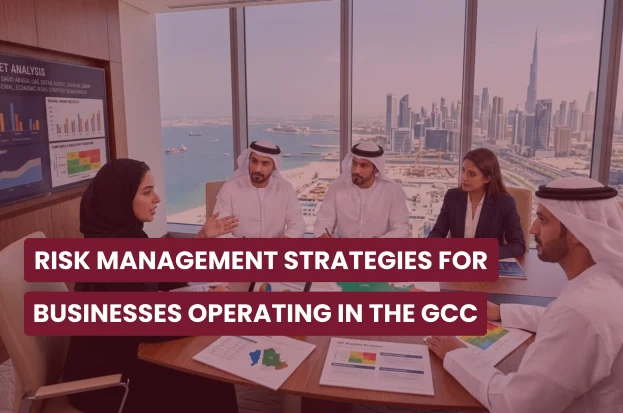

October 17, 2026
How to Set Up a Company in Qatar for E-commerce (No Office)

October 10, 2026
Market Research in Qatar: What Founders Must Check First

October 03, 2026
Setup a Company in Qatar: 10 Business Ideas Worth Chasing

September 26, 2026
Mainland Business Setup in Qatar: MOCI Registration & Licensing Guide